

Your coffee holds more than a thousand compounds, from health-supporting antioxidants to trace heavy metals. Here’s what the research actually shows about what’s really in your cup, and why testing matters.

Key Takeaways
- Coffee contains more than a thousand natural compounds beyond caffeine, including antioxidants like chlorogenic acid, trigonelline, diterpenes, and melanoidins that research links to anti-inflammatory and other potential health effects.
- Coffee can also carry trace contaminants. A study of Peruvian coffee found generally low, safe levels of heavy metals in the beans, though those from one region had higher arsenic.
- What ends up in your cup depends on origin, processing, and packaging. Roasting and brewing remove much of the metal content, and independent batch testing is the most reliable way to know what’s actually there.
Coffee is more than a caffeine delivery system. Along with the lift it gives you, it carries antioxidants and other natural compounds that may benefit your health.
But not everything in the cup works in your favor. Trace metals and other contaminants can find their way into beans during growing, harvesting, packaging, and brewing.
Below, we look at what coffee holds beyond caffeine, which compounds may help, why trace metals turn up, and what ultimately decides what lands in your cup.
What beneficial ingredients are found in coffee?
Caffeine is the compound most people think of first, since it delivers such an immediate lift. But coffee actually contains more than a thousand naturally occurring compounds, which together shape its flavor, aroma, and antioxidant activity.
The beauty of antioxidants
Antioxidants protect your cells from everyday damage caused by free radicals, and coffee is full of them. A 2025 review in Frontiers in Nutrition mapped coffee’s core functional compounds and how they may support health.
Among the ones it identified are chlorogenic acid, trigonelline, diterpenes, and melanoidins. Your favorite face cream or serum likely contains chlorogenic acid, since it has antioxidant and anti-aging properties, and several of these compounds are being studied for anti-inflammatory effects.
Researchers are also examining whether they can slow or prevent disease progression, so there’s a good chance your coffee is doing a little more for you than you first thought.
Coffee beans contain over 1,000 identified compounds, including the antioxidants that give the brew much of its potential health benefits. — Peng et al., Frontiers in Nutrition, 2025
What about coffee contaminants?
Coffee beans grow on plants rooted in tropical soil, taking up whatever is in that soil, water, and air. After harvest, the green beans are dried, shipped in bulk to a roaster, and only then packed into the bag that reaches your kitchen. At each step, outside compounds can work their way in, and not all of them are as welcome as antioxidants.
Roasting handles some of it. High heat breaks down most pesticide residues and the mold toxins that can form during drying and storage. But heat only works on compounds it can break apart, and metals aren’t among them.
Are there heavy metals in coffee beans?
A research team in Peru found trace amounts of arsenic, lead, and chromium in coffee beans grown across the country. For the most part, these beans contained low concentrations, and the overall risk to consumers was judged unlikely to cause harm. Not all beans were equal, though. Those grown in San Martín had the highest arsenic levels in the study, and arsenic carried the most notable cancer-risk estimate, particularly at the higher end of exposure.
Just as milk contains calcium and spinach contains iron, it’s natural for coffee to hold trace amounts of metals. Coffee plants pull water, minerals, and metals from the soil to grow and produce flavorful beans.
But naturally occurring doesn’t always mean harmless, which is why some brands test each batch before packaging and selling their beans.
Microplastics and other contaminants
If you’ve ever left a plastic water bottle in a hot car, you know what plastic can taste like. Heat and time can pull compounds out of plastic and into whatever it’s holding.
With coffee, chemicals can migrate from plastic packaging into food. On top of that:
-
Mold can grow on beans during harvesting, storage, and transport, especially in warm, wet conditions, and can produce toxins such as ochratoxin A.
-
Pesticides can linger on conventionally grown beans, so choosing organic or tested beans can make a difference.
-
Acrylamide is a byproduct of roasting, classified as a possible carcinogen, but is usually present only in small amounts.

What determines what’s in your coffee
Like any food, what’s in your coffee depends on how the beans are grown, stored, and brewed. So no two coffees carry quite the same chemistry.
How origin and processing affect coffee beans
Where beans are grown shapes both flavor and composition. High-altitude regions tend to produce more fragrant, flavorful beans, while too much sun can degrade quality, so origin can make a big difference in taste.
The processing method matters too. Researchers comparing specialty coffees found that the method, whether washed, natural, honey, or fermented, affected the heavy metal content of both green and roasted beans.
The encouraging part is that roasting can substantially reduce metal content in some cases, and because most metals don’t dissolve readily in hot water, only a fraction of what’s in the bean makes it into your cup.
Why testing and transparency matter
You can't taste or see most of what’s in your coffee, so some health-conscious companies test each batch for metals, mold, plastic, and other contaminants before it’s sold.
This approach is a win-win: the company builds credibility, and you know exactly what you're drinking.
A bag’s label can tell you where the beans were grown and how they were roasted, but not what actually made it into the final product. Independent testing fills that gap. Origin, processing, and materials all shape what’s in your cup, but testing is what confirms it, giving you a clearer picture.
What does this mean for your cup?
Your daily coffee is, for the most part, as good as it tastes. Across the research to date, the contaminants that turn up in coffee sit at low levels.
Where it does matter is at the margins, and that’s mostly a question of how much you drink. The arsenic signal in that Peruvian study showed up at the higher end of exposure, so the person who should pay a little attention is the three-or-four-cups-a-day drinker, not the occasional one.
If that’s you, the levers are simple and worth knowing: the ochratoxin A that mold can produce is the reason sourcing and dry storage matter, and choosing organic or batch-tested beans is the most direct way to cap the metal, mold, and pesticide side of the equation. If you drink a cup or two a day, the evidence says you can enjoy it and move on.
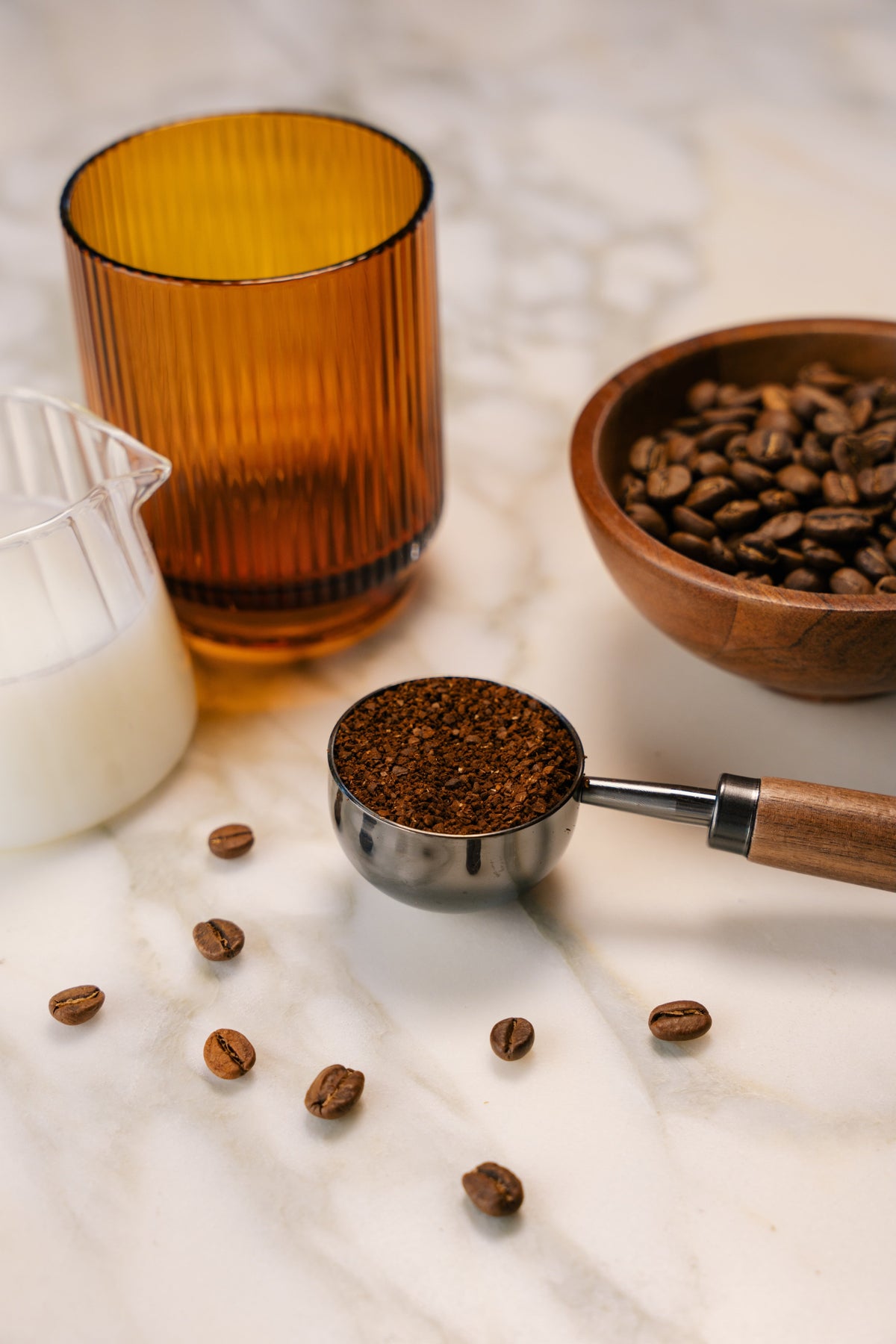
The reason to protect your coffee isn’t only to keep bad things out, it’s to keep the good things in. Chlorogenic acid and the other antioxidants that opened this article are sensitive to oxygen, light, and moisture, so the same habits that limit contaminants, whole beans ground fresh, stored airtight and dark, also preserve the compounds that make coffee worth drinking.
So the practical shape of it is this: The differences that exist come down to where it’s grown, how it’s stored, and what it’s packaged in. Those are things you can actually choose. You can’t taste or see metals, mold, or plastic, which is why independent batch testing is the one thing that turns “probably fine” into “confirmed.”
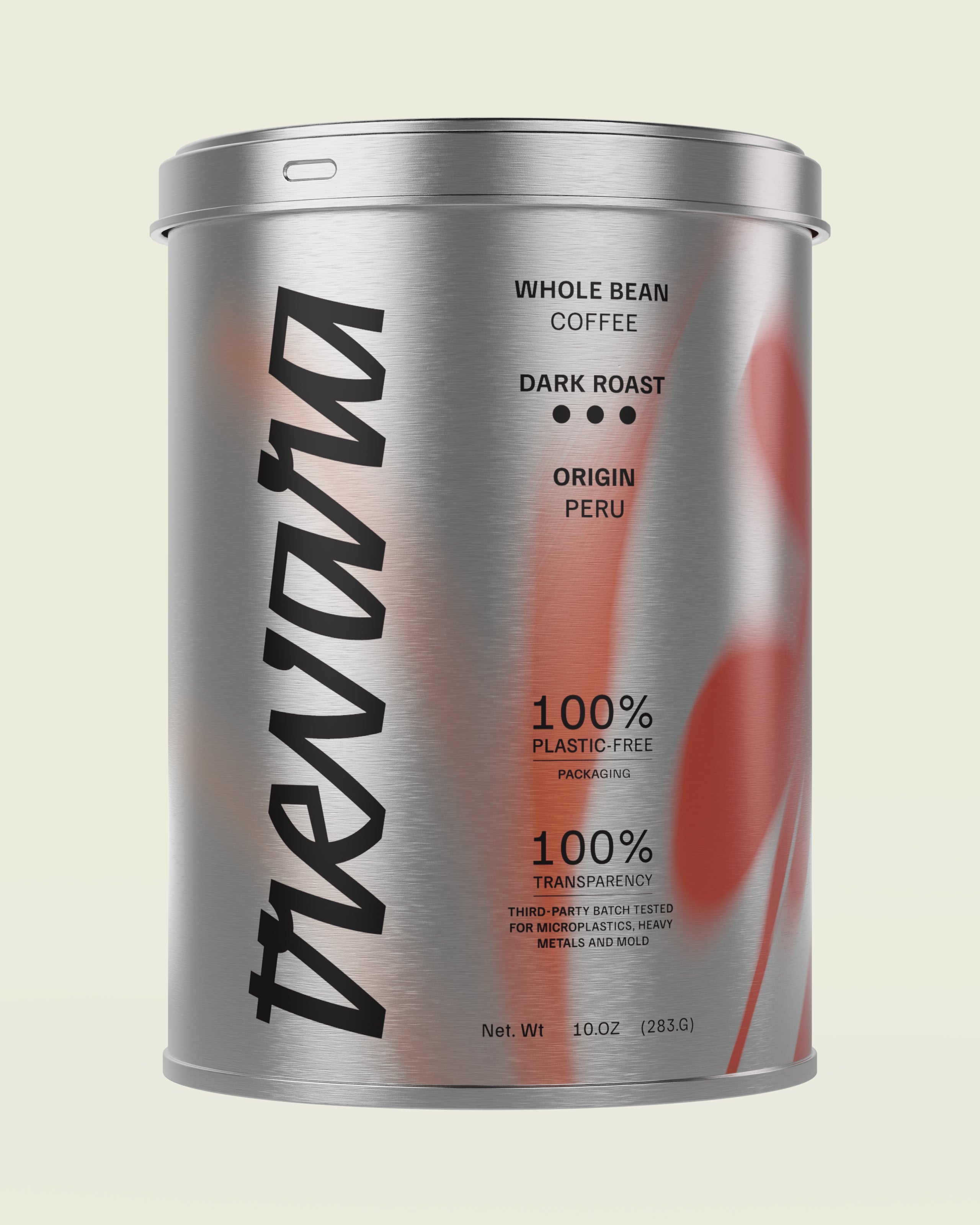
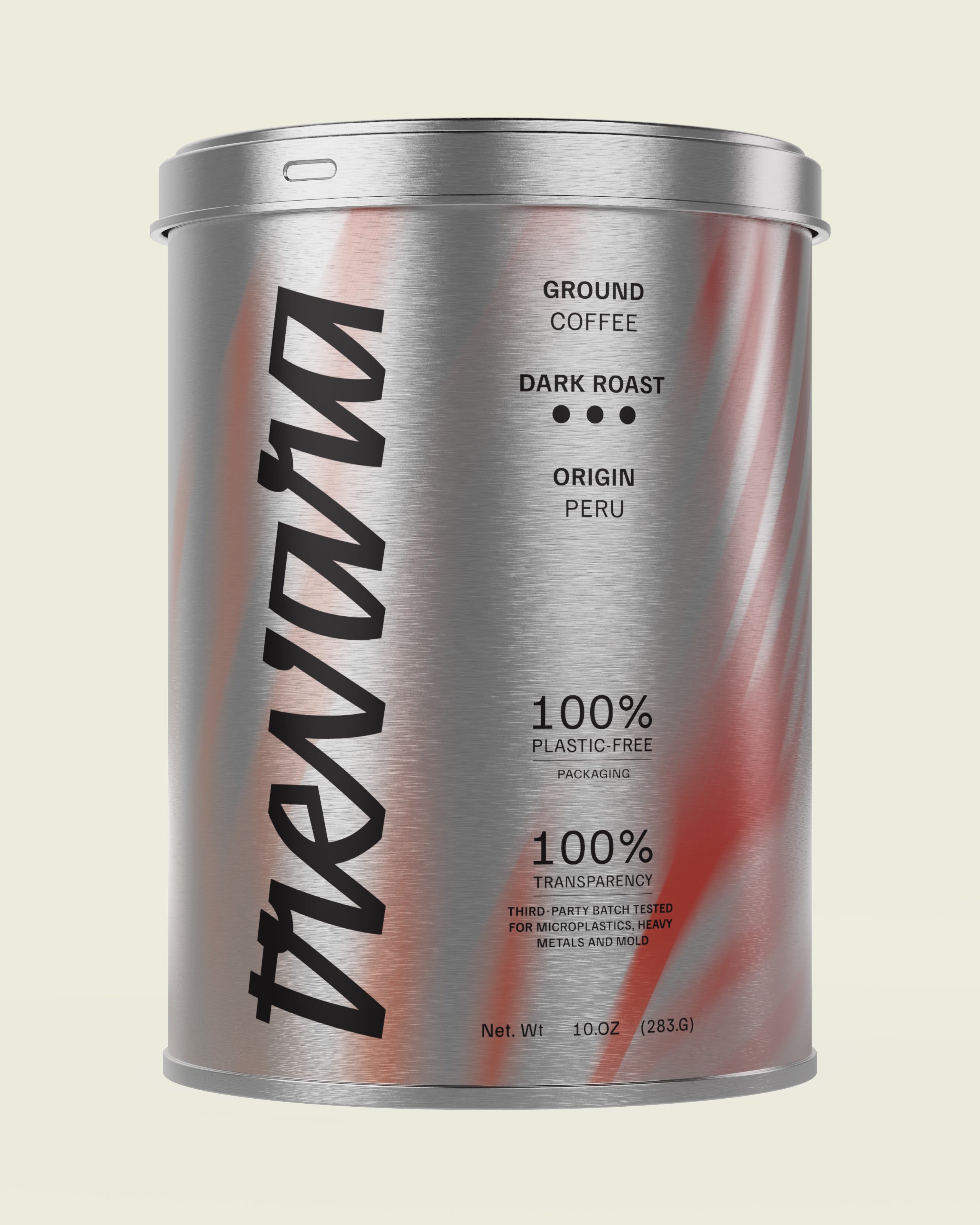
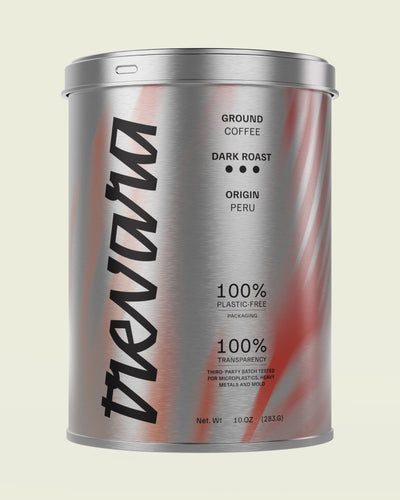
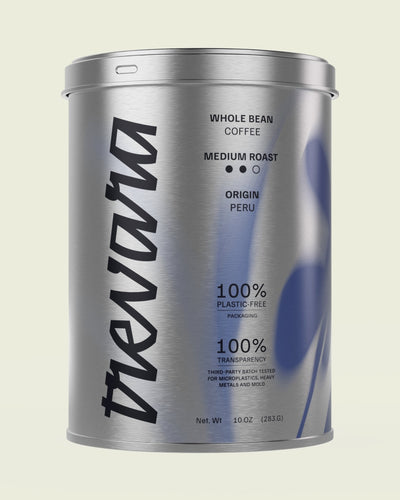
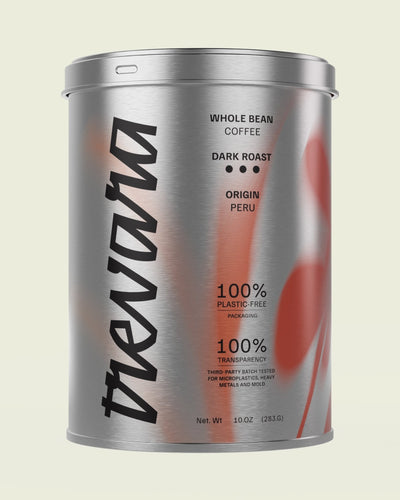
That’s the approach Trevara takes, testing its beans and using plastic-free packaging and brewing materials, so you know both what’s in your cup and what isn’t.
Explore plastic-free coffee at Trevara.
Article sources
-
Peng R, Lan M, Zhang Y, Zhang S, Yu B, Yang X, Li S, Liu Z, Kang W. Transforming coffee from an empirical beverage to a targeted nutritional intervention: health effects of coffee's core functional components on chronic diseases. Front Nutr. 2025;12:1690881. doi:10.3389/fnut.2025.1690881
-
Guadalupe GA, Chavez SG, Arellanos E, Doménech E. Probabilistic risk characterization of heavy metals in Peruvian coffee: implications of variety, region and processing. Foods. 2023;12(17):3254. doi:10.3390/foods12173254
-
Várady M, Boržíková J, Popelka P. Effect of processing method (natural, washed, honey, fermentation, maceration) on the availability of heavy metals in specialty coffee. Heliyon. 2024;10(3):e25563. doi:10.1016/j.heliyon.2024.e25563
-
Guadalupe GA, Grandez-Yoplac DE, Arellanos E, Doménech E. Probabilistic risk assessment of metals, acrylamide and ochratoxin A in instant coffee from Brazil, Colombia, Mexico and Peru. Foods. 2024;13(5):726. doi:10.3390/foods13050726
-
Gerassimidou S, Geueke B, Groh KJ, Muncke J, Hahladakis JN, Martin OV, Iacovidou E. Unpacking the complexity of the polyethylene food contact articles value chain: a chemicals perspective. J Hazard Mater. 2023;454:131422. doi:10.1016/j.jhazmat.2023.131422
-
European Food Safety Authority. Literature review on micro- and nanoplastic release from food contact materials during their use. EFSA Supporting Publication. 2025;22(10):EN-9733. doi:10.2903/sp.efsa.2025.EN-9733